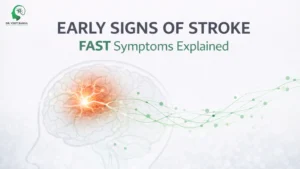
A stroke is a medical emergency, but many people miss the early warning signs. Knowing how to identify a stroke early can protect brain function, reduce long-term disability, and even save lives. The FAST method is a simple and reliable way to recognize the most common early signs of stroke and act without delay.
What Is a Stroke?

A stroke occurs when blood flow to a part of the brain is disrupted. Without oxygen and nutrients, brain cells begin to get damaged within minutes.
There are two main types of stroke:
- Ischemic stroke – caused by a blocked blood vessel
- Hemorrhagic stroke – caused by bleeding in the brain
Both require immediate medical attention.
In real-world healthcare practices, delayed recognition is one of the most common reasons for severe stroke-related complications.
What Does FAST Mean in Stroke Symptoms?
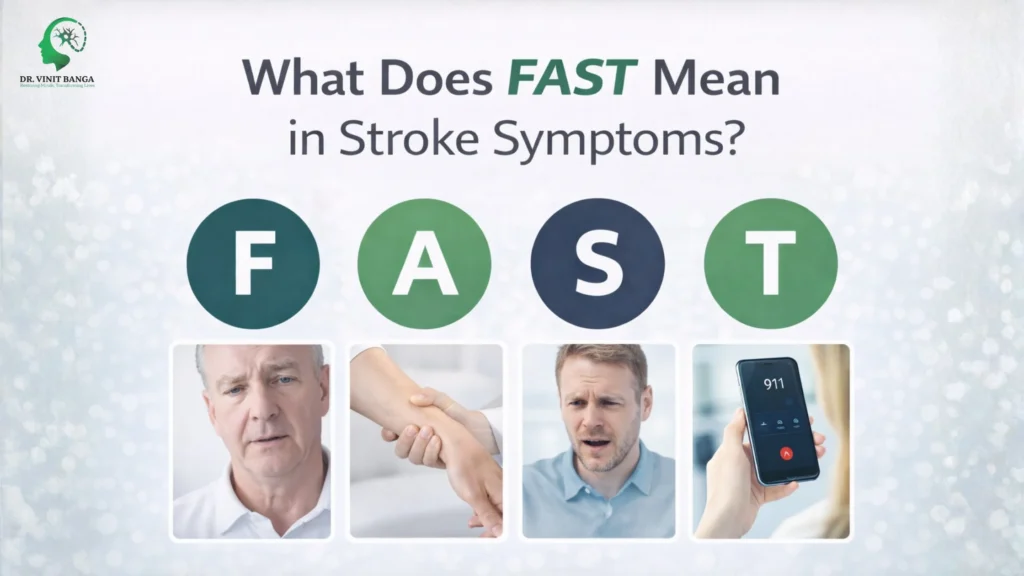
FAST is an internationally accepted method used to quickly identify early stroke symptoms.
F – Face Drooping
- One side of the face may suddenly droop or feel numb
- The person may struggle to smile evenly
- Facial expressions may appear asymmetrical
A – Arm Weakness
- Sudden weakness or numbness in one arm
- Difficulty lifting both arms at the same time
- A feeling of heaviness or loss of control
S – Speech Difficulty
- Slurred or unclear speech
- Trouble forming words
- Difficulty understanding simple sentences
T – Time to Act
- If any of these symptoms appear, seek emergency care immediately
- Do not wait for symptoms to improve on their own
Based on industry experience, early action within the first few hours can significantly improve recovery outcomes.
Other Early Warning Signs of Stroke
Not all strokes present the same way. Some people may experience additional symptoms such as:
- Sudden dizziness or loss of balance
- Severe headache with no known cause
- Blurred or lost vision in one or both eyes
- Sudden confusion or disorientation
Even if these symptoms last for a short time, they should never be ignored.
Why Recognizing Stroke Symptoms Early Matters
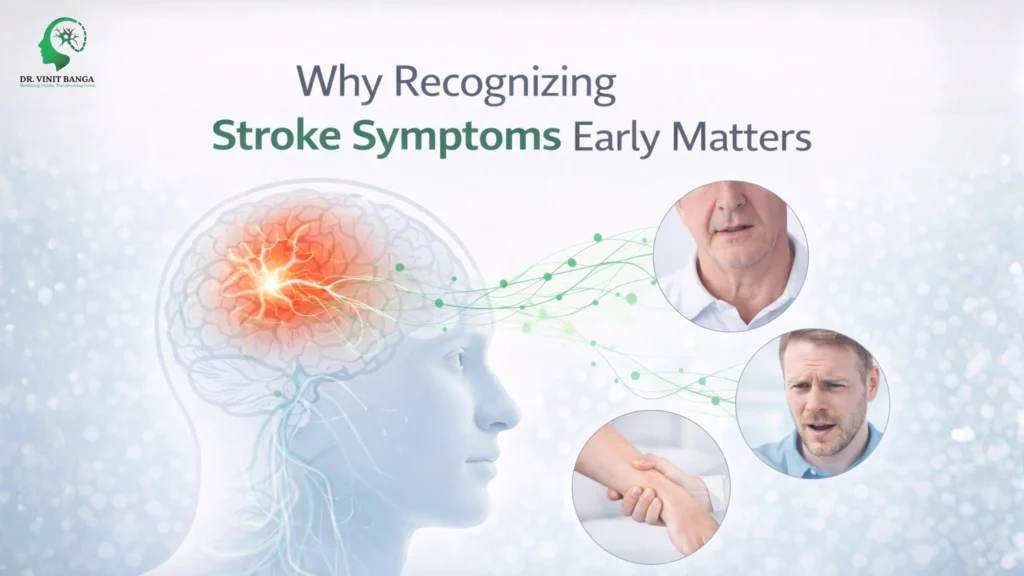
The brain is extremely sensitive to interruptions in blood flow. Every minute counts.
Early identification helps:
- Reduce permanent brain damage
- Improve response to treatment
- Lower the risk of long-term disability
- Support better rehabilitation outcomes
Most clinics face this challenge: patients arrive too late because early signs were mistaken for fatigue, stress, or dehydration.
When Should You Seek Neurological Care?
Any sudden change in movement, speech, vision, or awareness should be evaluated immediately. Timely neurological care helps with early assessment, brain imaging, and clear guidance when decisions matter most. For a broader understanding of how stroke care fits into long-term brain and nerve health, readers can explore the Complete Guide to Neurological Care in Faridabad, which explains symptoms, conditions, and care pathways in detail.
Stroke awareness is an essential part of overall brain and nerve health education, helping individuals and families respond confidently and without delay.
How This Fits Into Comprehensive Neurological Care
Stroke is not an isolated condition. Many people require follow-up care for:
- Movement and coordination
- Speech and swallowing
- Memory and cognitive function
- Nerve-related symptoms
Understanding early stroke signs is one important step within a broader neurological care journey.
FAQ
What are the earliest signs of a stroke?
The earliest signs include face drooping, arm weakness, and speech difficulty. These symptoms often appear suddenly and require immediate attention.
What does FAST stand for in stroke?
FAST stands for Face drooping, Arm weakness, Speech difficulty, and Time to act. It helps people recognize stroke symptoms quickly.
Can stroke symptoms be temporary?
Yes. Some symptoms may disappear within minutes, but this can still indicate a serious condition and should be evaluated immediately.
Is headache always a sign of stroke?
Not always, but a sudden, severe headache with no clear cause can be a warning sign, especially when combined with other symptoms.
When should I seek medical help for stroke symptoms?
Immediately. Any sudden neurological change should be treated as an emergency.