First Aid for Seizure is a crucial life-saving skill that everyone should know. Seeing someone experience a seizure can be frightening, especially if you are unsure how to help. However, staying calm and taking the right steps can prevent injuries and support the person’s recovery until medical assistance is available.
A seizure occurs due to sudden abnormal electrical activity in the brain. While epilepsy is a common cause, seizures can also result from fever, stroke, brain injury, infections, low blood sugar, or other neurological conditions. Understanding proper seizure first aid can make a significant difference during an emergency. Learning First Aid for Seizure situations can help family members, caregivers, teachers, and colleagues respond quickly and confidently during a medical emergency.
What is the First Aid for seizures?
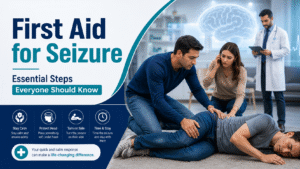
First aid for a seizure involves keeping the person safe from injury, moving dangerous objects away, protecting their head, timing the seizure, and turning them onto their side after the seizure stops. Do not restrain them or place anything in their mouth. Seek emergency medical care if the seizure lasts longer than five minutes or if it is their first seizure.
What Is a Seizure?
A seizure is a sudden surge of abnormal electrical activity in the brain that can affect movement, awareness, behavior, sensations, or consciousness.
Seizures can vary in severity. Some people experience full-body convulsions, while others may stare blankly for a few seconds.
Common causes include:
- Epilepsy
- Stroke
- Brain infections
- Head injuries
- High fever
- Low blood sugar
- Brain tumors
- Neurological disorders
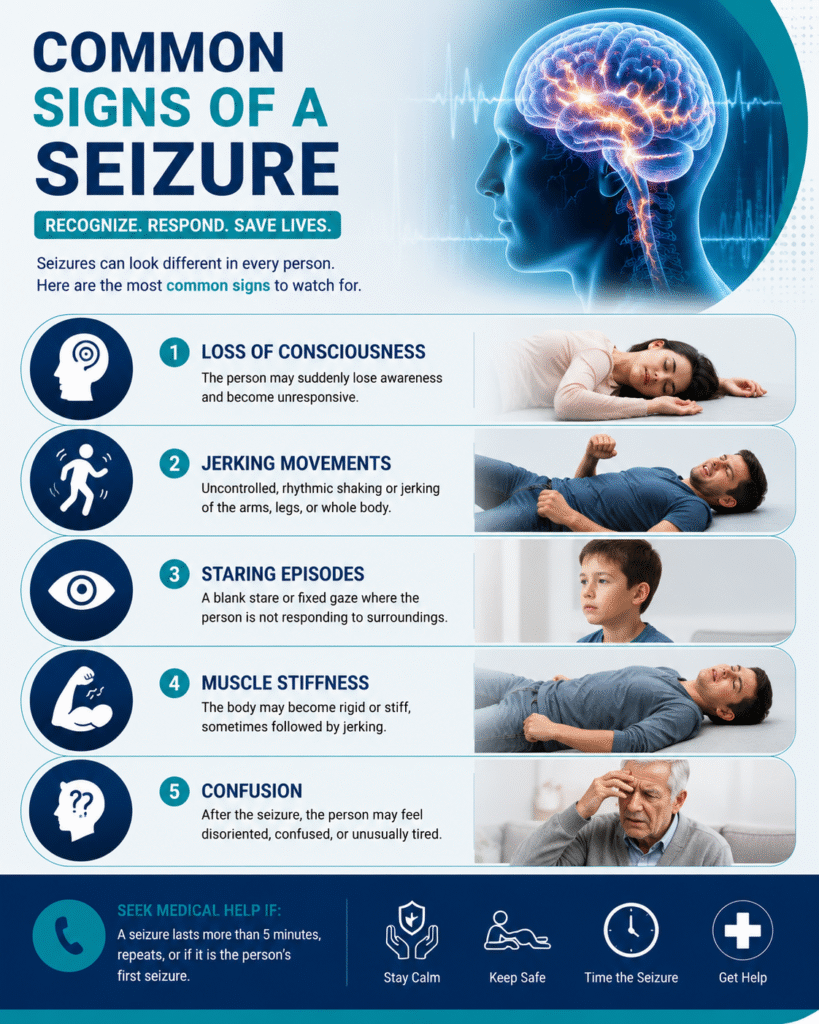
Common Signs Someone Is Having a Seizure
Recognizing seizure symptoms quickly helps you respond appropriately.
Loss of Consciousness
The person may suddenly become unresponsive and unaware of their surroundings.
Uncontrolled Jerking Movements
Rhythmic shaking or jerking of the arms and legs is common during generalized seizures.
Staring Spells
Some seizures involve brief periods of staring and a lack of responsiveness.
Muscle Stiffness
The body may become rigid before jerking movements begin.
Temporary Confusion
After a seizure, the person may feel disoriented, confused, or tired.
First Aid for Seizure: Step-by-Step Guide
1. Stay Calm
Remain calm and reassure others nearby. Panic can make the situation more stressful for everyone involved.
2. Keep the Person Safe
Move away from any objects that could cause injury, such as:
- Furniture
- Sharp objects
- Glass items
- Electrical equipment
3. Protect the Head
Place something soft under the person’s head, such as:
- Folded jacket
- Cushion
- Towel
This helps prevent head injuries during convulsions.
4. Loosen Tight Clothing
Loosen collars, ties, scarves, or anything around the neck that may restrict breathing.
5. Turn the Person Onto Their Side
Once the seizure stops, gently place them in the recovery position on their side. This helps keep the airway clear and reduces the risk of choking.
6. Time the Seizure
Note how long the seizure lasts. This information can be valuable for healthcare providers.
7. Stay With the Person
Remain with them until they are fully awake, alert, and aware of their surroundings.
What Not to Do During a Seizure
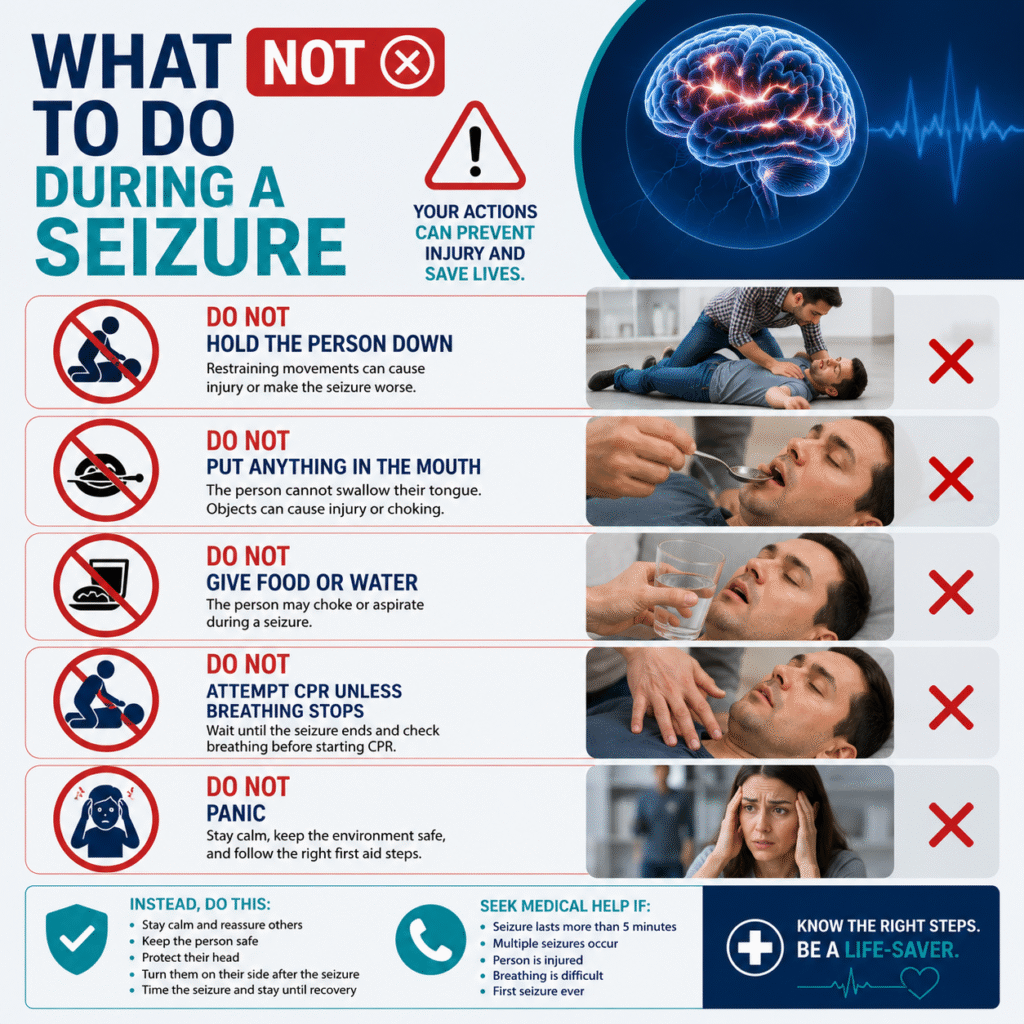
Many common myths about seizures can actually cause harm.
Do NOT:
❌ Hold the person down
❌ Put anything in their mouth
❌ Try to stop the movements
❌ Give food or water immediately
❌ Attempt mouth-to-mouth breathing during the seizure
❌ Panic or leave the person alone
Contrary to popular belief, a person cannot swallow their tongue during a seizure.
When Should You Call Emergency Medical Help?
Seek emergency medical assistance if:
- The seizure lasts more than 5 minutes
- Multiple seizures occur without recovery
- The person has difficulty breathing afterward
- The person is injured during the seizure
- It is their first seizure
- The seizure occurs in water
- The person is pregnant
- The person does not regain consciousness
Even when you know First Aid for Seizure procedures, certain situations require immediate medical evaluation and emergency support.
Why Proper First Aid for Seizure Is Important
Knowing proper seizure first aid helps:
- Prevent injuries
- Protect the airway
- Reduce complications
- Improve safety during recovery
- Provide reassurance to the person and family members
Quick and correct action can significantly improve outcomes.
Common Causes of Seizures
Epilepsy
Epilepsy is a neurological disorder characterized by recurring seizures.
Stroke
A stroke can damage brain tissue and trigger seizure activity.
Brain Injury
Head trauma may increase the risk of seizures.
High Fever
Febrile seizures are more common in young children.
Brain Infections
Conditions such as meningitis or encephalitis can cause seizures.
Low Blood Sugar
Severely low glucose levels may affect brain function and trigger seizures.
How Neurologists Diagnose Seizure Disorders
A neurologist uses several tests to determine the cause of seizures.
Medical History
Review of symptoms and seizure episodes.
Neurological Examination
Assessment of brain and nervous system function.
EEG (Electroencephalogram)
Measures electrical activity in the brain.
MRI Brain Scan
Helps identify structural abnormalities.
Blood Tests
Detect underlying medical conditions that may trigger seizures.
Treatment Options for Seizures
Treatment depends on the cause and type of seizure.
Anti-Seizure Medications
Many patients successfully control seizures with medication.
Lifestyle Modifications
Patients may be advised to:
- Get adequate sleep
- Avoid alcohol misuse
- Manage stress
- Follow medication schedules
Epilepsy Management
Long-term monitoring and treatment plans help reduce seizure frequency.
Advanced Neurological Care
Some patients may require specialized neurological interventions.
How to Help Someone Recover After a Seizure
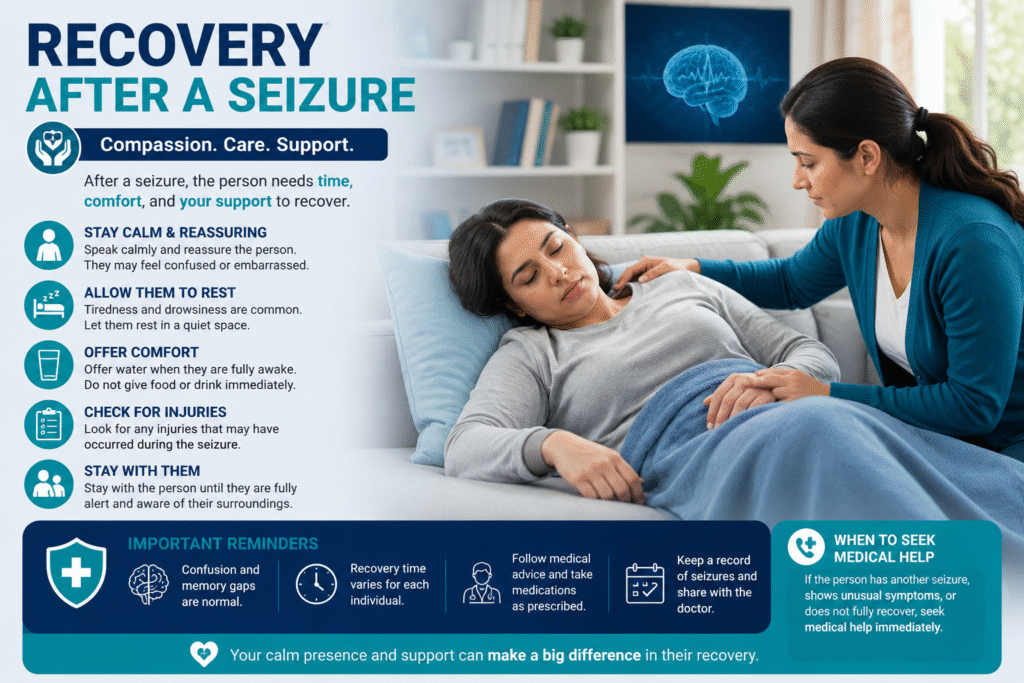
Once the seizure has ended:
- Speak calmly and reassuringly
- Allow them to rest
- Explain what happened
- Check for injuries
- Stay nearby until fully recovered
Many people feel tired, confused, or embarrassed after a seizure, so supportive care is important. Following First Aid for Seizure guidelines after the episode ends can help the person recover more comfortably and safely.
Why Choose Dr. Vinit Banga for Seizure Management?
Dr. Vinit Banga provides comprehensive care for patients with epilepsy and seizure disorders.
His approach includes:
- Accurate diagnosis
- Advanced neurological evaluation
- Personalized treatment plans
- Modern diagnostic techniques
- Long-term seizure management
Early diagnosis and expert care can help patients achieve better seizure control and improve quality of life.
Frequently Asked Questions
What is the first aid for a seizure?
First aid for a seizure involves protecting the person from injury, timing the seizure, turning them onto their side afterward, and seeking medical help when necessary.
Should I put something in the person’s mouth during a seizure?
No. Never place objects, fingers, or food in the person’s mouth during a seizure.
How long can a seizure safely last?
Most seizures last between one and three minutes. Emergency medical attention is recommended if a seizure lasts more than five minutes.
When should I call an ambulance for a seizure?
Call emergency services if the seizure is prolonged, the person is injured, has breathing difficulties, or it is their first seizure.
Can seizures cause brain damage?
Most brief seizures do not cause permanent damage. However, prolonged seizures can be dangerous and require urgent medical attention.
What should a person do after a seizure?
They should rest, hydrate when fully alert, and consult a healthcare professional if needed.
Are all seizures caused by epilepsy?
No. Seizures may occur due to fever, stroke, infections, head injuries, low blood sugar, or other neurological conditions.
Why is First Aid for Seizure important?
First Aid for seizures is important because it helps prevent injuries, protects the airway, and ensures the person receives appropriate care until recovery or medical assistance is available.
Conclusion
Knowing the correct First Aid for seizures can help you respond confidently during an emergency and protect someone from serious injury. Staying calm, ensuring safety, and understanding when to seek medical help are essential steps that can make a significant difference.
If you or a loved one experiences seizures, early evaluation by a neurologist is important for accurate diagnosis and effective treatment. Timely care can help manage seizures, reduce complications, and improve quality of life. Understanding and applying First Aid for Seizure can make a significant difference during a medical emergency. By recognizing seizure symptoms and following proper First Aid for Seizure steps, you can help protect the individual from harm and support a safer recovery.
Consult Dr. Vinit Banga for expert diagnosis, epilepsy management, and advanced neurological care.