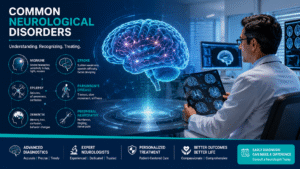
Neurological disorders can significantly impact your quality of life, affecting everything from movement and memory to speech and daily functioning. Whether you are experiencing persistent headaches, migraines, seizures, dizziness, nerve-related symptoms, or recovering from a stroke, selecting the right neurologist is one of the most important healthcare decisions you can make.
A skilled neurologist can accurately diagnose complex neurological conditions, recommend appropriate treatments, and guide you through long-term management plans. However, with many specialists available, patients often wonder how to choose the best neurologist for their specific needs.
This guide explains the key factors to consider when selecting a neurologist and how expert neurological care can help improve treatment outcomes.
Quick Answer: How Do You Choose the Best Neurologist?
To choose the best neurologist, look for a specialist with strong qualifications, extensive clinical experience, expertise in treating your specific condition, positive patient reviews, access to advanced diagnostic facilities, and a patient-centered approach to care. A neurologist who communicates clearly and develops personalized treatment plans can significantly improve outcomes.
Who Is a Neurologist?
A neurologist is a medical specialist trained to diagnose, treat, and manage disorders affecting the brain, spinal cord, nerves, and muscles.
Neurologists commonly treat:
- Migraine and chronic headaches
- Stroke and transient ischemic attacks (TIAs)
- Epilepsy and seizures
- Parkinson’s disease
- Multiple sclerosis
- Neuropathy
- Memory disorders
- Vertigo and dizziness
- Movement disorders
- Neuromuscular diseases
Because neurological conditions can be complex, specialized care is essential for accurate diagnosis and effective treatment.
Why Choosing the Right Neurologist Matters
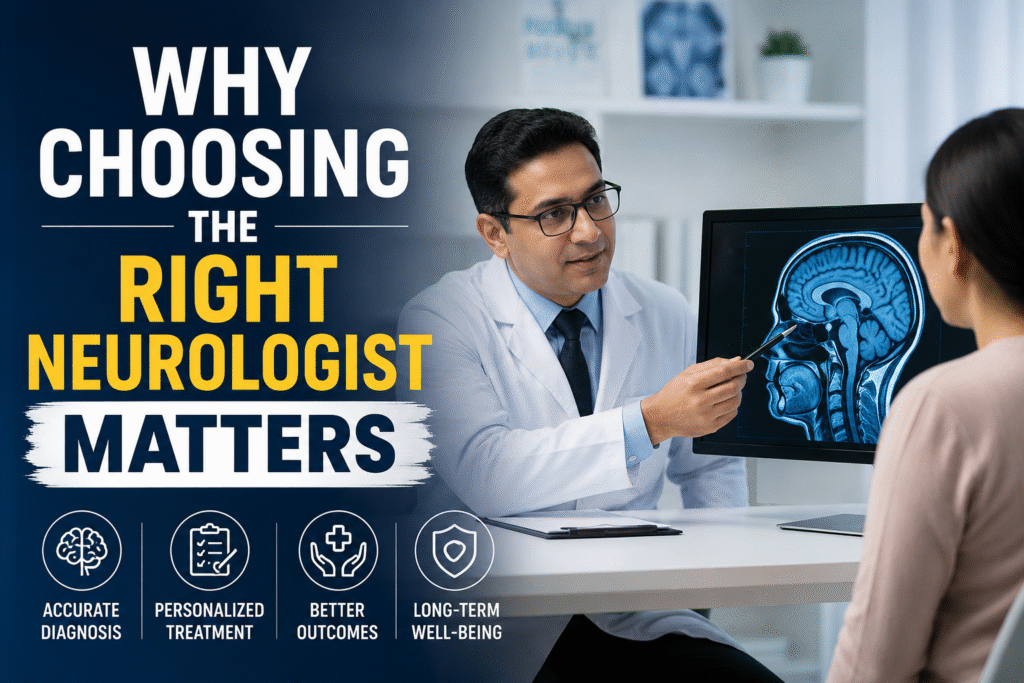
The nervous system controls nearly every function of the body. Even minor neurological symptoms can sometimes indicate serious underlying conditions.
Choosing the right neurologist helps ensure:
- Accurate diagnosis
- Early detection of serious conditions
- Personalized treatment strategies
- Access to advanced therapies
- Better long-term outcomes
- Improved quality of life
An experienced neurologist can identify subtle symptoms and recommend the most effective treatment plan based on your individual needs.
Key Factors to Consider When Choosing a Neurologist
1. Check Qualifications and Credentials
The first step is to verify the neurologist’s educational background, certifications, and professional training.
Look for:
- Recognized medical qualifications
- Specialized neurology training
- Board certifications
- Continuing medical education participation
- Professional memberships
These credentials indicate that the doctor has received appropriate training in neurological care.
2. Evaluate Clinical Experience
Experience plays a major role in neurology because many neurological disorders present differently in each patient.
Consider:
- Number of years in practice
- Experience treating neurological disorders
- Expertise in handling complex cases
- Experience with advanced neurological procedures
A neurologist with substantial clinical experience is often better equipped to manage challenging conditions.
3. Consider Their Area of Specialization
Neurology includes multiple subspecialties. Depending on your condition, you may benefit from a neurologist with focused expertise.
Examples include:
Stroke Care
Patients recovering from stroke may require specialized evaluation and treatment planning.
Migraine Management
Chronic migraine sufferers often need advanced treatment approaches and preventive therapies.
Epilepsy Treatment
Patients with recurrent seizures benefit from specialized neurological evaluation.
Parkinson’s Disease
Movement disorders require long-term management and expert monitoring.
Neuropathy and Nerve Disorders
Peripheral nerve disorders often need detailed diagnostic testing and customized treatment.
Choosing a neurologist familiar with your specific condition can improve treatment outcomes.
4. Assess Hospital Affiliation
The quality of healthcare facilities associated with a neurologist can influence your overall care experience.
Look for specialists connected with hospitals that offer:
- Advanced imaging services
- Emergency neurological care
- Stroke management facilities
- Neurocritical care support
- Multidisciplinary treatment teams
Access to comprehensive facilities can be particularly important during emergencies.
5. Read Patient Reviews and Testimonials
Patient feedback can provide valuable insights into:
- Communication style
- Professionalism
- Treatment satisfaction
- Appointment experience
- Overall patient care
While reviews should not be the only deciding factor, they can help you understand the experiences of other patients.
6. Evaluate Communication Skills
The best neurologists not only diagnose conditions but also help patients understand them.
A good neurologist should:
- Listen carefully
- Encourage questions
- Explain diagnoses clearly
- Discuss treatment options openly
- Involve patients in decision-making
Clear communication builds trust and improves treatment adherence.
7. Availability and Accessibility
Timely access to neurological care is important, especially when symptoms worsen suddenly.
Consider:
- Appointment availability
- Clinic location
- Follow-up support
- Emergency consultation options
Convenient access can make ongoing treatment easier and more effective.
8. Access to Advanced Diagnostic Technology
Modern neurology relies heavily on advanced diagnostic tools.
These may include:
- MRI scans
- CT scans
- EEG testing
- Nerve conduction studies
- Electromyography (EMG)
- Neurovascular imaging
Neurologists working with advanced technology can often diagnose conditions more accurately and efficiently.
Questions to Ask Before Choosing a Neurologist
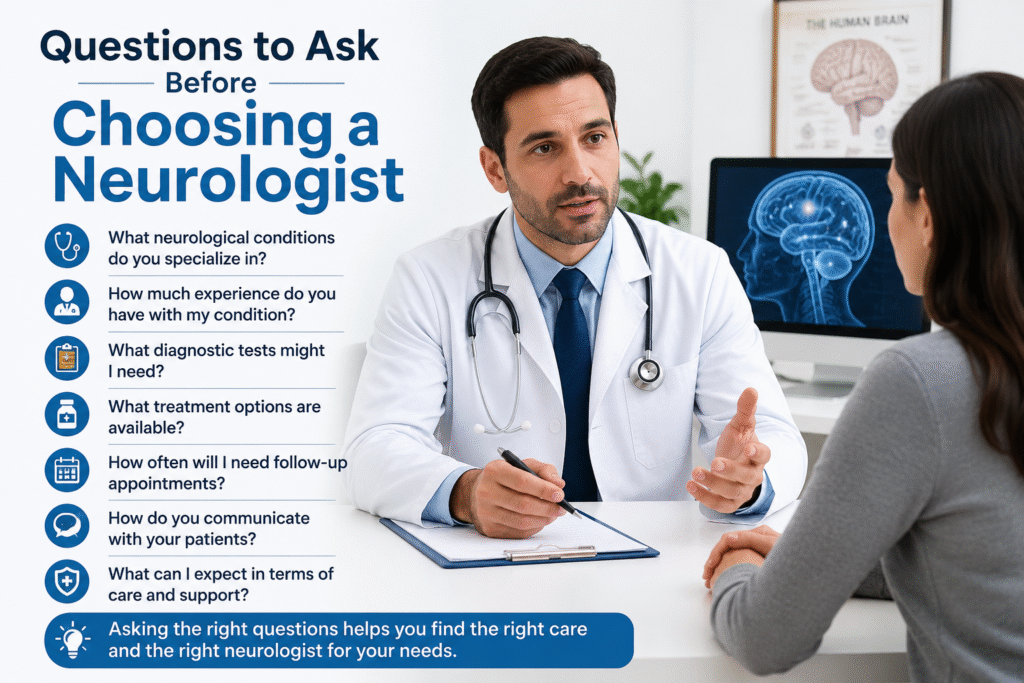
Before scheduling treatment, consider asking:
- What neurological conditions do you commonly treat?
- How much experience do you have with my condition?
- What diagnostic tests may be required?
- What treatment options are available?
- How often will follow-up visits be needed?
- What lifestyle changes can improve my condition?
- Are advanced treatment procedures available if required?
These questions can help you make an informed decision.
Signs You Should Consult a Neurologist
Many neurological symptoms should not be ignored.
Seek neurological evaluation if you experience:
Persistent Headaches
Frequent or severe headaches may require specialist assessment.
Migraines
Recurring migraines can affect daily life and may need preventive treatment.
Seizures
Any unexplained seizure should be evaluated promptly.
Stroke Symptoms
Sudden weakness, facial drooping, speech difficulty, or vision changes require immediate medical attention.
Memory Problems
Persistent memory loss or cognitive decline warrants professional evaluation.
Dizziness and Vertigo
Ongoing balance issues may indicate neurological disorders.
Numbness and Weakness
Persistent tingling, numbness, or muscle weakness should be investigated.
Early diagnosis often leads to better outcomes and more effective treatment.
Why Patients Trust Dr. Vinit Banga
When seeking expert neurological care, choosing a specialist with extensive experience and a patient-focused approach is essential.
Dr. Vinit Banga is known for providing comprehensive neurological evaluation and management for a wide range of neurological disorders. His approach emphasizes accurate diagnosis, evidence-based treatment planning, patient education, and personalized care.
Patients seek consultation for conditions including:
- Stroke and neurovascular disorders
- Migraine and chronic headaches
- Epilepsy and seizure disorders
- Neuropathy
- Movement disorders
- Memory-related concerns
Through a commitment to clinical excellence and patient-centered care, he helps individuals navigate complex neurological conditions with confidence.
Benefits of Early Neurological Consultation
Many neurological conditions respond better when diagnosed early.
Benefits of early consultation include:
- Faster diagnosis
- Timely treatment initiation
- Reduced risk of complications
- Improved recovery potential
- Better symptom control
- Enhanced quality of life
Ignoring symptoms can sometimes lead to disease progression and more complicated treatment requirements.
Frequently Asked Questions
How do I know if a neurologist is good?
A good neurologist has strong qualifications, relevant experience, positive patient feedback, effective communication skills, and expertise in treating your specific neurological condition.
What qualifications should a neurologist have?
A neurologist should have recognized medical qualifications, specialized training in neurology, and ongoing professional education to stay up to date with current treatment approaches.
When should I see a neurologist?
You should consult a neurologist if you experience persistent headaches, migraines, seizures, dizziness, memory issues, numbness, weakness, or symptoms suggestive of stroke.
Can a neurologist treat migraines?
Yes. Neurologists diagnose and manage migraines using lifestyle recommendations, medications, preventive therapies, and advanced treatment strategies when necessary.
What conditions does a neurologist treat?
Neurologists treat disorders affecting the brain, spinal cord, nerves, and muscles, including stroke, epilepsy, Parkinson’s disease, migraines, neuropathy, and memory disorders.
How often should I visit a neurologist?
The frequency depends on your diagnosis, treatment plan, and symptom severity. Some patients require regular monitoring, while others need periodic follow-ups.
How do I choose the best neurologist in Faridabad?
Look for qualifications, experience, specialization, patient reviews, hospital affiliations, communication skills, and a commitment to patient-centered care.
Conclusion
Choosing the best neurologist is an important step toward protecting your brain health and achieving better treatment outcomes. By evaluating qualifications, experience, specialization, communication skills, and access to advanced care, you can make an informed decision that supports your long-term well-being.
If you are experiencing neurological symptoms or seeking expert guidance for a neurological condition, consulting an experienced neurologist can help ensure timely diagnosis and effective treatment. Early intervention often leads to better outcomes, improved symptom management, and a higher quality of life.