Common Neurological Disorders affect millions of people worldwide and can significantly impact daily life, mobility, memory, and overall well-being. The nervous system, which includes the brain, spinal cord, and nerves, controls nearly every function of the body. When neurological disorders develop, they can interfere with movement, sensation, cognition, and communication.
Some neurological conditions, such as migraines, are relatively common and manageable, while others, including stroke and Parkinson’s disease, may require specialized medical care. Recognizing symptoms early and seeking timely treatment can help prevent complications and improve outcomes.
In this article, we’ll explore the most common neurological disorders, their symptoms, causes, and available treatment options.
What Are Neurological Disorders?
Neurological disorders are conditions that affect the nervous system, including the brain, spinal cord, and peripheral nerves. These disorders can disrupt communication between the brain and the rest of the body, leading to a wide range of symptoms.
Neurological conditions may develop due to aging, genetic factors, infections, injuries, autoimmune diseases, or vascular problems affecting the brain.
Common Neurological Disorders
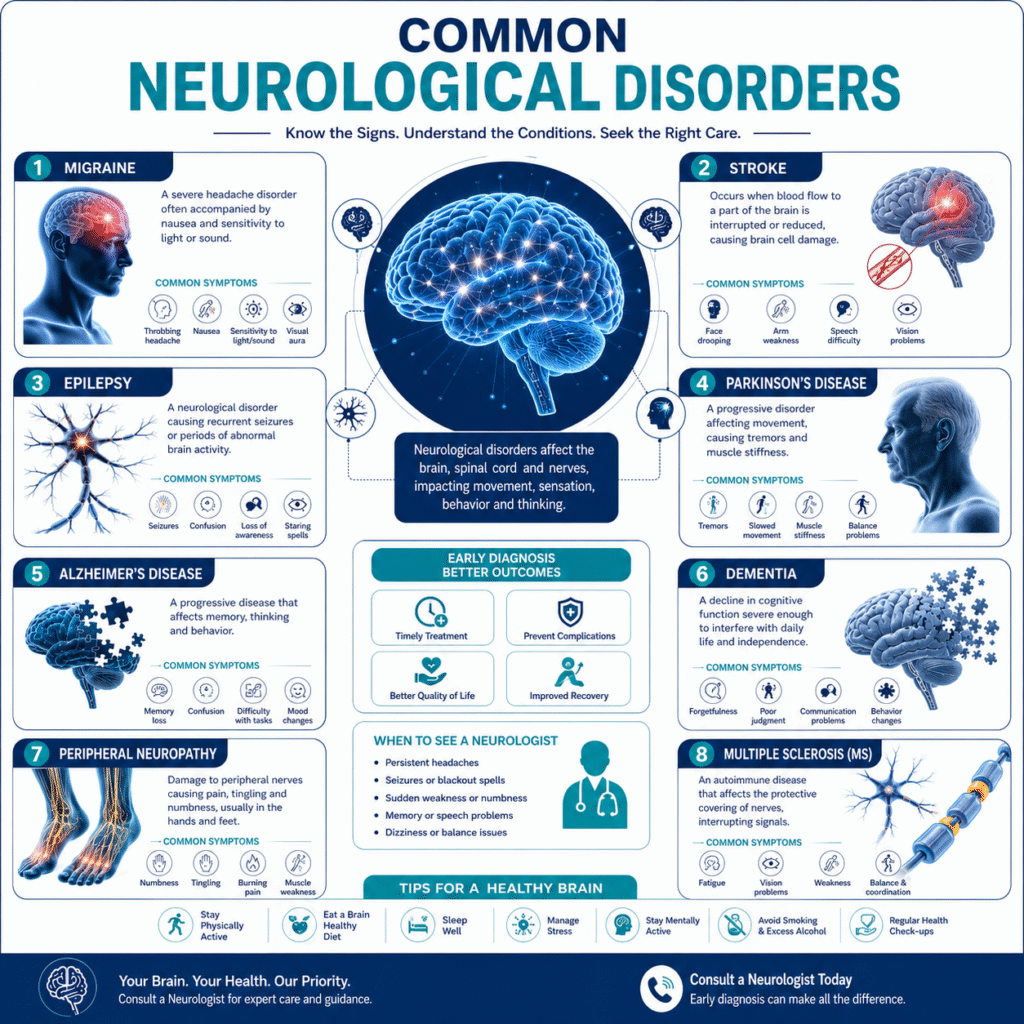
1. Migraine
Migraines are one of the most common neurological disorders and cause recurring headaches that can be severe and disabling.
Symptoms:
- Intense throbbing headache
- Sensitivity to light and sound
- Nausea and vomiting
- Visual disturbances (aura)
Causes:
- Genetic predisposition
- Hormonal changes
- Stress
- Sleep disturbances
2. Stroke
A stroke occurs when blood flow to part of the brain is interrupted or reduced, depriving brain tissue of oxygen.
Symptoms:
- Facial drooping
- Arm weakness
- Speech difficulty
- Sudden confusion
- Vision problems
Stroke is a medical emergency that requires immediate treatment.
3. Epilepsy
Epilepsy is a neurological condition characterized by recurrent seizures caused by abnormal electrical activity in the brain.
Symptoms:
- Seizures
- Temporary confusion
- Loss of consciousness
- Uncontrolled jerking movements
With proper treatment, many individuals with epilepsy can lead normal lives.
4. Parkinson’s Disease
Parkinson’s disease is a progressive neurological disorder that affects movement and coordination.
Symptoms:
- Tremors
- Slow movements
- Muscle stiffness
- Balance problems
Early diagnosis can help improve symptom management and quality of life.
5. Alzheimer’s Disease
Alzheimer’s disease is a progressive brain disorder that affects memory, thinking, and behavior.
Symptoms:
- Memory loss
- Difficulty solving problems
- Confusion about time and place
- Personality changes
It is the most common cause of dementia among older adults.
6. Dementia
Dementia is a general term for cognitive decline severe enough to interfere with daily activities.
Symptoms:
- Forgetfulness
- Difficulty communicating
- Poor judgment
- Behavioral changes
Early intervention can help manage symptoms and improve patient care.
7. Peripheral Neuropathy
Peripheral neuropathy occurs when nerves outside the brain and spinal cord become damaged.
Symptoms:
- Tingling sensations
- Numbness
- Burning pain
- Muscle weakness
Diabetes is one of the leading causes of peripheral neuropathy.
8. Multiple Sclerosis (MS)
Multiple sclerosis is an autoimmune disorder that affects the protective covering of nerve fibers.
Symptoms:
- Fatigue
- Vision problems
- Muscle weakness
- Difficulty with coordination
Symptoms may vary significantly from person to person.
Common Symptoms of Neurological Disorders
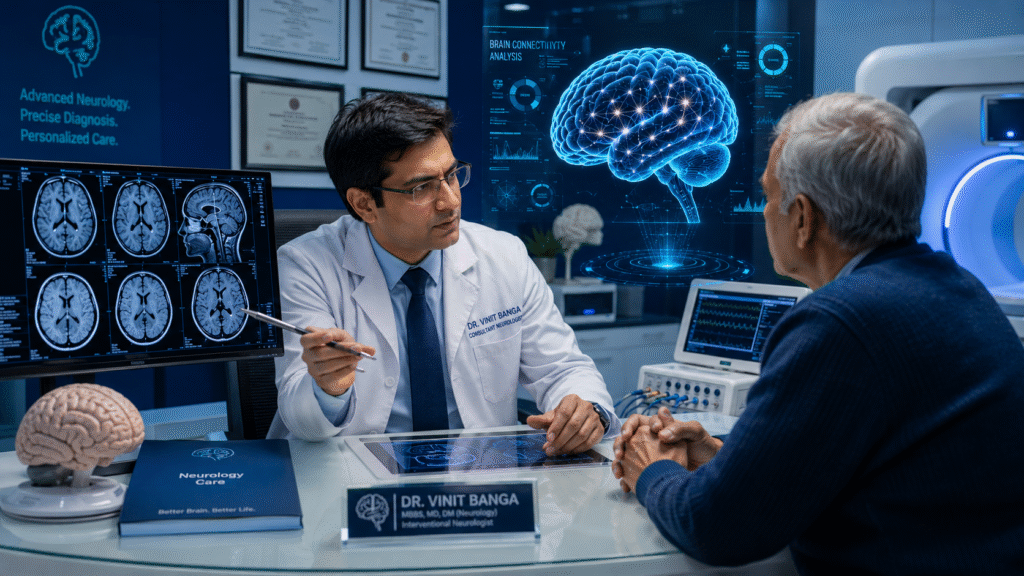
Many neurological conditions share similar symptoms. Seek medical attention if you experience:
- Chronic headaches
- Dizziness or vertigo
- Numbness or tingling
- Muscle weakness
- Seizures
- Memory problems
- Balance difficulties
- Tremors
- Vision changes
- Speech difficulties
Persistent neurological symptoms should not be ignored.
What Causes Neurological Disorders?
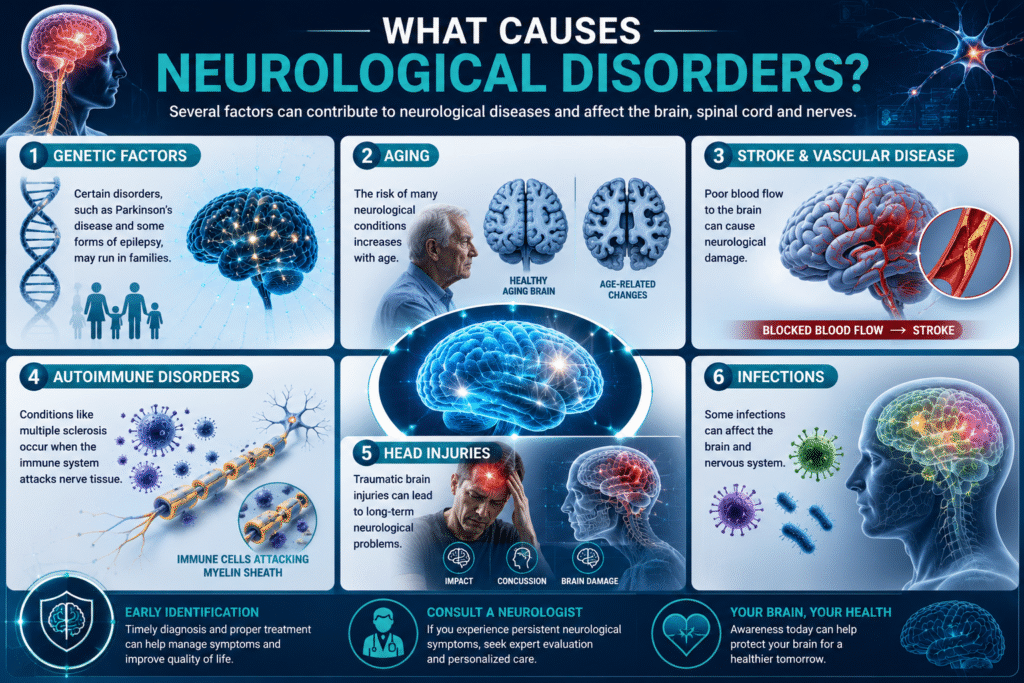
Several factors can contribute to neurological diseases:
Genetic Factors
Certain disorders, such as Parkinson’s disease and some forms of epilepsy, may run in families.
Aging
The risk of many neurological conditions increases with age.
Stroke and Vascular Disease
Poor blood flow to the brain can cause neurological damage.
Autoimmune Disorders
Conditions like multiple sclerosis occur when the immune system attacks nerve tissue.
Head Injuries
Traumatic brain injuries can lead to long-term neurological problems.
Infections
Some infections can affect the brain and nervous system.
When Should You See a Neurologist?
Consult a neurologist if you experience:
- Frequent or severe headaches
- Sudden weakness
- Memory loss
- Seizures
- Persistent dizziness
- Numbness or tingling
- Balance problems
- Difficulty speaking
Early diagnosis can improve treatment outcomes and prevent complications.
How Neurological Disorders Are Diagnosed
Neurologists use various diagnostic tools to identify neurological conditions.
Neurological Examination
Evaluates reflexes, coordination, sensation, and cognitive function.
MRI Scan
Provides detailed images of the brain and spinal cord.
CT Scan
Useful for detecting stroke, bleeding, or structural abnormalities.
EEG (Electroencephalogram)
Measures electrical activity in the brain and helps diagnose epilepsy.
Nerve Conduction Studies
Assess nerve function and detect peripheral nerve damage.
Treatment Options for Common Neurological Disorders
Treatment depends on the specific condition and severity of symptoms.
Medications
Used to manage symptoms and slow disease progression.
Lifestyle Modifications
Healthy habits can support brain health and improve outcomes.
Physical Therapy
Helps improve mobility, strength, and balance.
Rehabilitation Programs
Important for stroke recovery and neurological rehabilitation.
Interventional Neurology Procedures
Advanced minimally invasive techniques may be recommended for certain neurological conditions.
Tips for Maintaining Brain Health
Maintaining a healthy lifestyle can reduce the risk of neurological disorders.
- Exercise regularly
- Eat a balanced diet
- Get adequate sleep
- Manage stress effectively
- Stay mentally active
- Control blood pressure and diabetes
- Avoid smoking and excessive alcohol consumption
These habits contribute to long-term brain health.
Why Choose Dr. Vinit Banga?
Dr. Vinit Banga is an experienced Interventional Neurologist and Stroke Specialist known for providing comprehensive neurological care.
Patients benefit from:
- Expertise in stroke management
- Advanced neurological diagnostics
- Personalized treatment plans
- Patient-centered care
- Modern interventional neurology techniques
His commitment to early diagnosis and evidence-based treatment helps patients achieve better outcomes.
Frequently Asked Questions
What are the most common neurological disorders?
The most common neurological disorders include migraine, stroke, epilepsy, Parkinson’s disease, Alzheimer’s disease, dementia, peripheral neuropathy, and multiple sclerosis.
What are the early signs of neurological problems?
Early signs may include headaches, dizziness, numbness, memory loss, weakness, tremors, and balance difficulties.
Can neurological disorders be cured?
Some neurological conditions can be effectively managed, while others require long-term treatment and monitoring.
What causes neurological diseases?
Neurological diseases may result from genetics, aging, infections, autoimmune disorders, injuries, or vascular problems affecting the brain.
Are migraines considered neurological disorders?
Yes, migraines are neurological disorders that affect the brain and nervous system.
How are neurological disorders diagnosed?
Neurologists may use neurological examinations, MRI scans, CT scans, EEG tests, and nerve conduction studies.
Conclusion
Common neurological disorders can affect people of all ages and significantly impact quality of life. Conditions such as migraine, stroke, epilepsy, Parkinson’s disease, dementia, and neuropathy require timely diagnosis and appropriate treatment.
Recognizing symptoms early and seeking expert neurological care can improve outcomes and help prevent complications. If you experience persistent headaches, dizziness, memory problems, weakness, or other neurological symptoms, consult Dr. Vinit Banga for expert evaluation and advanced neurological treatment.