Many people experience headaches and neck pain at the same time, leading them to wonder whether the two are connected. The answer is yes—certain neck problems can contribute to headaches. In some cases, the pain actually begins in the neck and spreads to the head, a condition known as a cervicogenic headache.
Poor posture, muscle strain, cervical spine disorders, and injuries can all affect the muscles, joints, and nerves in the neck, resulting in headache symptoms. While occasional discomfort often improves with rest and lifestyle changes, a healthcare professional should evaluate persistent or severe headaches to rule out other underlying causes.
In this article, we’ll explore how neck problems can cause headaches, common symptoms to watch for, prevention strategies, and when it’s time to consult a neurologist.
Can Neck Problems Cause Headaches?
Yes, neck problems can cause headaches. The bones, muscles, joints, ligaments, and nerves in the neck work closely with the structures of the head. When these tissues become irritated or injured, pain signals can travel from the neck to the head, resulting in a headache.
These headaches are commonly referred to as cervicogenic headaches, meaning the pain originates in the neck but is felt in the head. They may also coexist with tension headaches or even trigger migraines in some individuals.
Common Neck Problems That Can Trigger Headaches
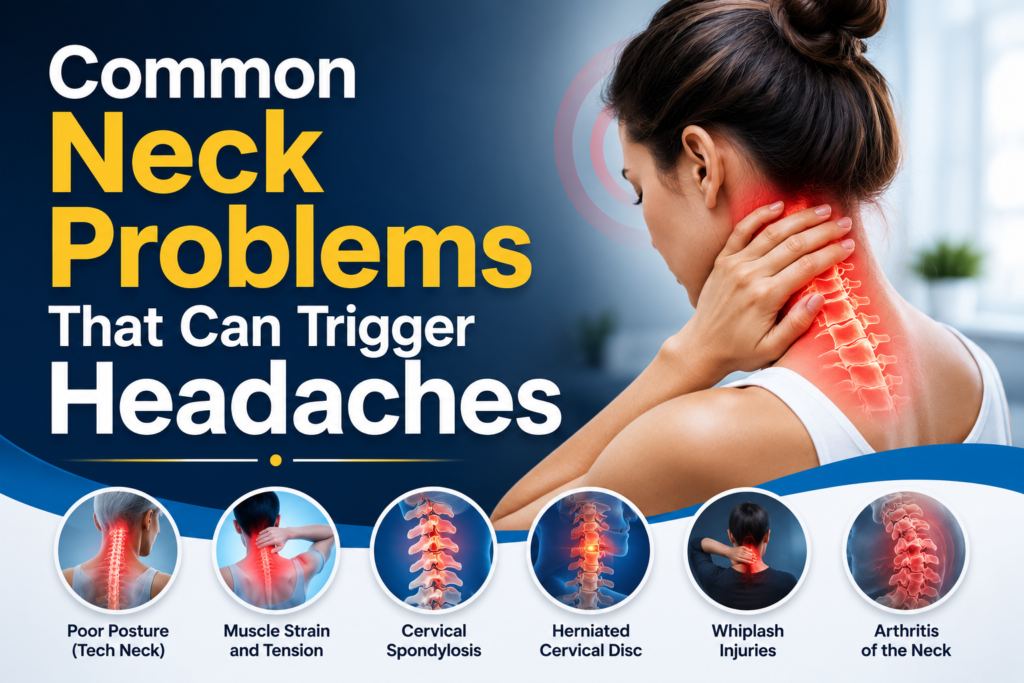
Several conditions affecting the neck may contribute to headaches.
1. Poor Posture (Tech Neck)
Spending long hours looking down at a smartphone or sitting in front of a computer can place extra stress on the neck muscles. This condition, often called tech neck, is becoming increasingly common.
Poor posture can lead to muscle tightness and tension, causing headaches that typically begin at the back of the head or neck.
2. Muscle Strain and Tension
Overuse of the neck muscles due to prolonged sitting, stress, or improper sleeping positions can result in muscle tension.
This tightness may lead to pain that radiates from the neck into the head, often causing tension-type headaches.
3. Cervical Spondylosis
Cervical spondylosis refers to age-related wear and tear of the cervical spine. Changes in the joints and discs can irritate nearby structures and contribute to chronic neck pain and headaches.
Although cervical spondylosis is common with aging, not everyone with these changes experiences symptoms.
4. Herniated Cervical Disc
A herniated disc in the neck can put pressure on nearby nerves, leading to neck pain that may radiate to the shoulders, arms, or head.
Depending on the affected nerve, additional symptoms such as tingling or numbness may occur.
5. Whiplash Injuries
Neck injuries caused by sudden forward and backward movement, such as during a motor vehicle collision, can damage muscles, ligaments, and joints.
Headaches are a common symptom after whiplash and may develop immediately or several days after the injury.
6. Arthritis of the Neck
Inflammation or degeneration of the neck joints can reduce mobility and contribute to chronic pain, stiffness, and headaches.
Symptoms of a Neck-Related Headache
Neck-related headaches often have distinct characteristics that help differentiate them from other headache types.
Common symptoms include:
- Pain that starts in the neck and spreads to the back or front of the head
- Headache on one side of the head
- Neck stiffness
- Pain that worsens with neck movement
- Reduced range of motion in the neck
- Shoulder or upper back pain
- Tenderness around the neck muscles
Some people may also experience dizziness or discomfort while maintaining certain head positions for extended periods.
Common neck problems causing headaches
Simple lifestyle changes can often reduce the frequency of headaches caused by neck problems.
Maintain Good Posture
Keep your head aligned with your shoulders while sitting and standing. Avoid bending your neck forward for prolonged periods.
Create an Ergonomic Workspace
Position your computer screen at eye level and adjust your chair so your feet rest comfortably on the floor.
Take Regular Breaks
If you work at a computer, stand up, stretch, and move around every 30 to 60 minutes.
Perform Neck Stretching Exercises
Gentle stretching and strengthening exercises may improve flexibility and reduce muscle tension. If you have significant neck pain, seek guidance from a healthcare professional before starting an exercise program.
Sleep with Proper Neck Support
Use a supportive pillow that keeps your neck in a neutral position throughout the night.
Stay Physically Active
Regular physical activity helps strengthen muscles, improve posture, and reduce stiffness.
When Should You See a Neurologist?
While many neck-related headaches improve with self-care, medical evaluation is recommended if:
- Headaches become frequent or severe.
- Neck pain persists for several weeks.
- Headaches interfere with daily activities.
- Pain develops after a neck injury.
- You experience numbness, weakness, or tingling in the arms.
- Headaches are accompanied by vision changes, difficulty speaking, or balance problems.
- Over-the-counter pain relievers do not provide adequate relief.
These symptoms may indicate a condition that requires further assessment.
How a Neurologist Can Help
A neurologist can evaluate persistent headaches and determine whether they are related to the neck or another neurological condition.
The evaluation may include:
- A detailed medical history
- Neurological examination
- Assessment of neck movement and muscle strength
- Imaging studies such as MRI or CT scans when clinically appropriate
Based on the findings, treatment may include medications, posture correction, physical therapy recommendations, lifestyle modifications, or referral to other specialists if needed.
Early diagnosis helps identify the underlying cause and supports more effective long-term management.
Frequently Asked Questions
Can a stiff neck cause headaches?
Yes. Tight or strained neck muscles can contribute to headaches by increasing tension around the head and neck.
What is a cervicogenic headache?
A cervicogenic headache is a headache that originates from problems in the neck, such as the joints, muscles, or nerves, but is felt in the head.
How can I tell if my headache is coming from my neck?
Headaches that begin in the neck, worsen with neck movement, and are associated with neck stiffness may be related to cervical problems. A medical evaluation is needed for an accurate diagnosis.
Can poor posture cause headaches?
Yes. Poor posture, especially during prolonged computer or smartphone use, can strain the neck muscles and contribute to tension or cervicogenic headaches.
When should I seek medical help for neck-related headaches?
Consult a healthcare professional if headaches are frequent, severe, occur after an injury, or are associated with neurological symptoms such as weakness, numbness, vision changes, or difficulty speaking.
Conclusion
So, can neck problems cause headaches? In many cases, the answer is yes. Poor posture, muscle strain, cervical spine disorders, and neck injuries can all contribute to headaches that affect daily life. Fortunately, maintaining good posture, creating an ergonomic workspace, staying physically active, and seeking timely medical advice can help reduce symptoms and improve overall neck health.
If you experience persistent headaches along with neck pain, stiffness, or other neurological symptoms, don’t ignore them. An early evaluation can help identify the underlying cause and guide the most appropriate treatment.
For expert assessment and personalized care for headaches, neck-related neurological conditions, migraines, and other disorders of the nervous system, consult Dr. Vinit Banga, Interventional Neurologist and Stroke Specialist, for comprehensive neurological evaluation and evidence-based treatment.