Dizziness and balance problems are common health concerns that can affect people of all ages. While occasional dizziness may not be serious, frequent or severe symptoms can indicate underlying neurological issues that require expert attention.
These problems can make daily activities difficult, increasing the risk of falls and affecting quality of life. The brain, inner ear, and nervous system work together to maintain balance, and any disruption in this system can lead to instability or a spinning sensation.
Understanding the neurological causes of dizziness and balance problems is essential for timely diagnosis and effective treatment. With expert evaluation and advanced care, these conditions can be managed successfully.
What Causes Dizziness and Balance Problems?
Dizziness and balance problems often arise when there is a disruption in the complex system that helps your body stay stable—mainly the brain, inner ear, and nervous system. The inner ear (vestibular system) detects motion and position, while the brain processes this information and coordinates with muscles and vision to maintain balance. When any part of this system is affected, it can lead to sensations like spinning (vertigo), unsteadiness, or lightheadedness.
Several neurological conditions can interfere with this process. Vestibular disorders affect the inner ear and its connection to the brain, causing vertigo and imbalance. Migraines, especially vestibular migraines, can trigger dizziness even without a headache due to abnormal brain signaling. Stroke can disrupt blood flow to areas of the brain responsible for coordination, leading to sudden and severe balance issues.
Parkinson’s disease affects movement control and posture, increasing the risk of instability and falls. Multiple sclerosis damages nerve pathways, slowing or blocking communication between the brain and body, which impacts coordination and spatial awareness.
Because these conditions directly affect how the brain interprets and responds to movement and position, they can significantly impair the body’s ability to maintain stability. This is why persistent or unexplained dizziness should never be ignored and should be evaluated by a neurologist.
Understanding Dizziness and Balance Problems
Dizziness is a broad term that includes different sensations:
• Vertigo: A spinning feeling
• Lightheadedness: Feeling faint or weak
• Imbalance: Difficulty maintaining posture
The brain processes signals from the eyes, inner ear, and muscles to maintain balance. Any disruption in these signals can result in dizziness and balance problems.
Common Neurological Causes of Dizziness and Balance Problems
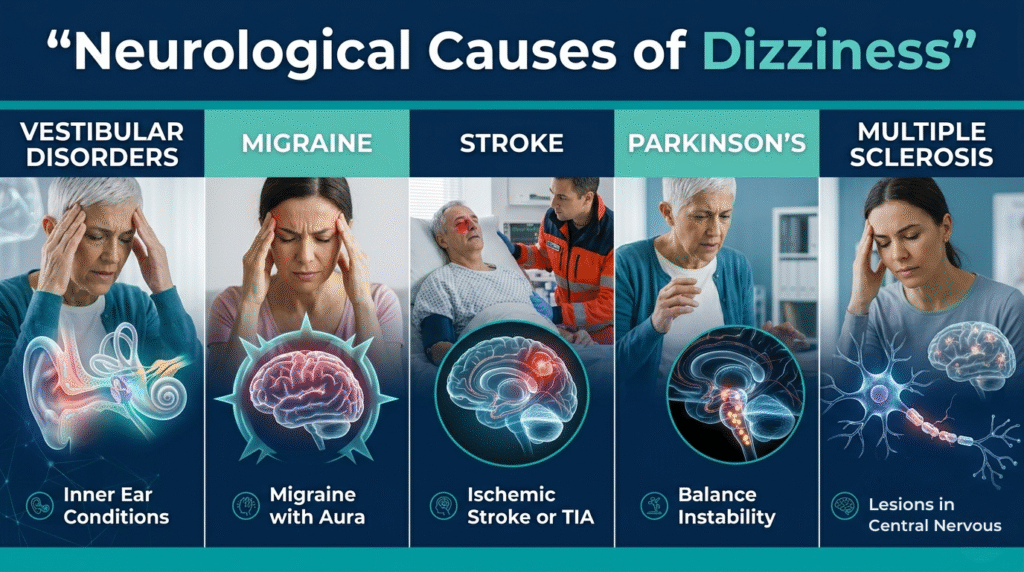
Vestibular Disorders
Problems in the inner ear and its connection to the brain can lead to vertigo and imbalance.
Migraine-Related Dizziness
Vestibular migraines can cause dizziness even without a headache.
Stroke or Transient Ischemic Attack (TIA)
Sudden dizziness with weakness or speech difficulty can be a sign of stroke and requires immediate medical attention.
Parkinson’s Disease
Affects movement control, leading to postural instability and balance issues.
Multiple Sclerosis
Damages nerve signals, affecting coordination and balance.
Brain Tumors
Pressure on brain areas responsible for balance can cause persistent dizziness.
Symptoms Associated with Dizziness and Balance Problems
Common symptoms include:
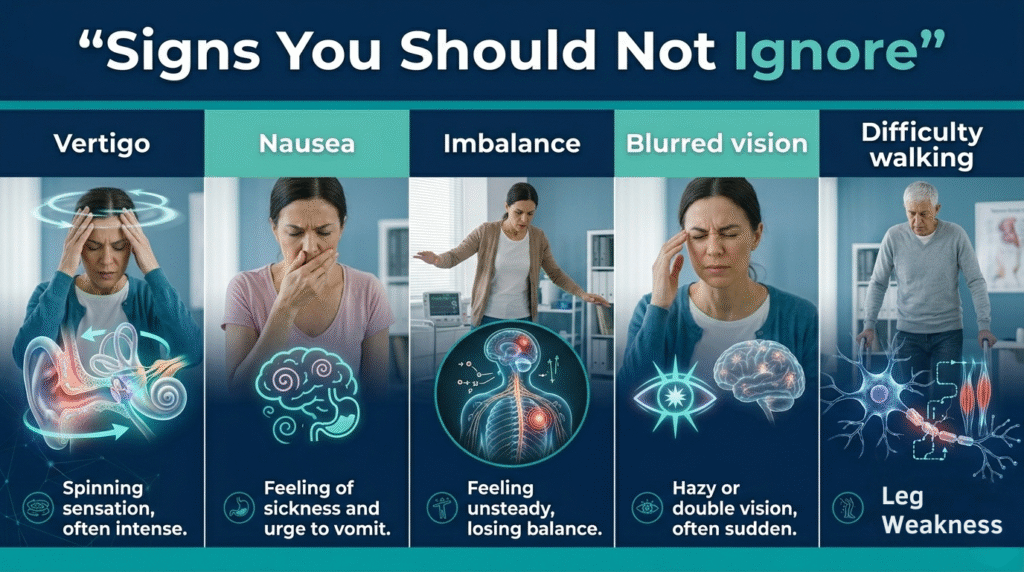
• Spinning sensation (vertigo)
• Loss of balance
• Nausea or vomiting
• Blurred or double vision
• Difficulty walking
• Lightheadedness
If these symptoms occur frequently, a medical evaluation is important.
When to See a Neurologist?
Seek medical help if you experience:
• Sudden or severe dizziness
• Dizziness with weakness or numbness
• Difficulty speaking or walking
• Frequent falls or imbalance
• Persistent symptoms lasting days
Early diagnosis can prevent serious complications.
Diagnosis of Dizziness and Balance Problems
A neurologist may recommend:
• Neurological examination
• MRI or CT scan to assess brain structure
• EEG for brain activity
• Balance and vestibular tests
Accurate diagnosis helps identify the exact cause of dizziness and balance problems.
Treatment Options for Dizziness and Balance Problems

Medications
Used to control symptoms like vertigo, nausea, or migraines.
Vestibular Rehabilitation Therapy
Special exercises to improve balance and coordination.
Lifestyle Changes
• Proper hydration
• Stress management
• Adequate sleep
Advanced Neurological Treatments
Used for conditions like stroke, Parkinson’s disease, or tumors.
Prevention Tips
• Stay hydrated
• Manage blood pressure
• Avoid sudden head movements
• Maintain a healthy lifestyle
• Regular medical checkups
Why Choose Dr. Vinit Banga
For effective management of dizziness and balance problems, choosing the right specialist is crucial because these symptoms can have multiple underlying causes that require precise evaluation. A neurologist not only identifies whether the issue is related to the brain, nerves, or inner ear coordination but also ensures that serious conditions are not overlooked. Early and accurate diagnosis plays a key role in preventing complications and improving recovery.
Dr. Vinit Banga brings extensive expertise in diagnosing and treating a wide range of neurological disorders that can cause dizziness and imbalance. His approach focuses on understanding the root cause rather than just managing symptoms. Using advanced diagnostic techniques such as detailed neurological examinations and imaging studies, he ensures accurate and timely identification of the problem.
Each patient receives a personalized treatment plan tailored to their specific condition, severity, and lifestyle needs. This may include medication, rehabilitation therapies, or advanced neurological interventions where required. With a strong emphasis on patient-focused care, Dr. Banga prioritizes clear communication, comfort, and long-term outcomes, helping patients regain confidence, stability, and a better quality of life.
FAQs – Dizziness and Balance Problems
What are the main causes of dizziness and balance problems?
They are often caused by issues in the brain, inner ear, or nervous system, including vestibular disorders, migraines, stroke, and neurological diseases.
Is dizziness a neurological problem?
Yes, dizziness can be neurological when it is linked to brain or nerve disorders affecting balance and coordination.
Can stress cause balance problems?
Yes, stress and anxiety can lead to dizziness and a sense of imbalance by affecting brain signals and blood flow.
When is dizziness serious?
Dizziness is serious if it occurs suddenly and is accompanied by symptoms such as weakness, speech problems, or loss of coordination.
How are balance disorders treated?
Treatment depends on the cause and may include medication, therapy, lifestyle changes, or advanced neurological care.
Conclusion
Dizziness and balance problems can range from mild, temporary discomfort to warning signs of serious neurological conditions, making it important not to ignore persistent symptoms. Understanding the underlying causes and seeking timely medical care can lead to early diagnosis and more effective treatment, helping prevent complications and improving quality of life. If you or your loved ones experience frequent or severe dizziness, it is essential to consult a specialist without delay. For expert evaluation, accurate diagnosis, and advanced neurological care, consult Dr. Vinit Banga, a trusted neurologist known for delivering patient-focused treatment and reliable outcomes.