Introduction
A persistent headache is something many people tend to ignore, often assuming it is caused by stress, lack of sleep, or routine fatigue. While occasional headaches are common and usually harmless, a headache that lingers for days, keeps recurring, or gradually worsens over time can be a warning sign of an underlying health issue.
In today’s fast-paced lifestyle, factors like excessive screen time, irregular sleep, and stress have made headaches more frequent. However, not all headaches are the same. Recognizing when a persistent headache requires medical attention is crucial for preventing complications and ensuring timely treatment.
This blog will help you understand the causes, warning signs, and, most importantly, when to consult a neurologist for a persistent headache.
What is a Persistent Headache?
A persistent headache refers to a headache that:

- Lasts for several days or even weeks
- Occurs frequently (daily or almost daily)
- Does not respond effectively to common pain relief methods
Unlike occasional headaches, which may resolve on their own, persistent headaches often indicate a deeper issue that requires proper diagnosis.
Types of Persistent Headaches
Understanding the type of headache can help in identifying the cause:
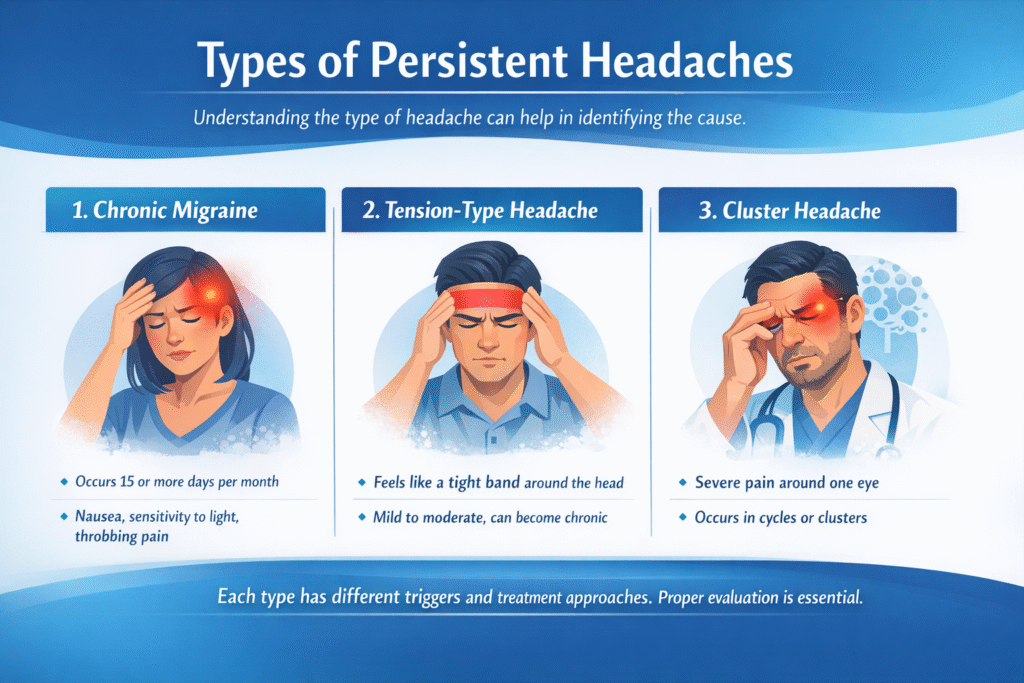
1. Chronic Migraine
- Occurs 15 or more days per month
- Often associated with nausea, sensitivity to light, and throbbing pain
2. Tension-Type Headache
- Feels like a tight band around the head
- Usually mild to moderate, but can become chronic
3. Cluster Headache
- Severe pain, usually around one eye
- Occurs in cycles or clusters
Each type has different triggers and treatment approaches, making proper evaluation essential.
Common Causes of Persistent Headache
Multiple lifestyle and medical factors can cause a persistent headache. Some of the most common include:
Lifestyle-Related Causes
- Stress and Anxiety: One of the leading causes of chronic headaches
- Poor Sleep Patterns: Irregular or insufficient sleep disrupts brain function
- Excessive Screen Time: Leads to eye strain and mental fatigue
- Dehydration: Even mild dehydration can trigger headaches
Medical Causes
- Hormonal Imbalance: Especially common in women
- Sinus Infections: Can cause pressure-like headaches
- Medication Overuse: Frequent use of painkillers may worsen headaches
- High blood pressure can contribute to recurring headaches
Identifying the root cause is key to effective treatment rather than just masking the symptoms.
Warning Signs You Should Not Ignore
While many persistent headaches are manageable, certain symptoms may indicate a serious condition.
Red Flag Symptoms Include:
- Sudden, severe headache (“worst headache of your life”)
- Headache accompanied by fever or stiff neck
- Blurred or double vision
- Confusion or difficulty understanding speech
- Weakness or numbness in the body
- Headache following a head injury
These symptoms should never be ignored, as they may signal neurological emergencies.
When to Consult a Neurologist for Persistent Headache
Many people delay seeking medical help, hoping the headache will resolve on its own. However, consulting a specialist at the right time can make a significant difference.

You Should See a Neurologist If:
- Your persistent headache lasts more than 2 weeks
- The pain is increasing in intensity or frequency
- It does not improve with over-the-counter medications
- It interferes with your daily activities or work
- You experience neurological symptoms like dizziness, weakness, or vision changes
Experienced specialists like Dr. Vinit Banga emphasize early evaluation to rule out serious conditions such as chronic migraine, nerve disorders, or vascular issues.
How a Neurologist Diagnoses Persistent Headache
Diagnosis is a crucial step in managing a persistent headache effectively. A neurologist performs a detailed assessment to identify the underlying cause.
1. Medical History Evaluation
- Frequency and duration of headaches
- Triggers and associated symptoms
- Lifestyle habits
2. Neurological Examination
- Reflex testing
- Coordination and balance assessment
- Sensory function evaluation
3. Imaging Tests
- MRI Scan: Provides detailed brain imaging
- CT Scan: Useful in detecting structural abnormalities
4. Additional Tests
- Blood tests to detect infections or deficiencies
- Eye examination if vision issues are suspected
Accurate diagnosis ensures targeted and effective treatment.
Treatment Options for Persistent Headache
The treatment of a persistent headache depends on its cause, severity, and frequency.
1. Medications
- Pain relievers for immediate relief
- Preventive medications for chronic headaches
- Migraine-specific drugs
2. Lifestyle Modifications
- Maintain a consistent sleep schedule
- Reduce stress through relaxation techniques
- Follow a balanced diet
- Stay physically active
3. Advanced Treatments
- Botox Injections: Effective for chronic migraine
- Nerve Blocks: Help relieve severe pain
- Specialized Neurological Therapies: Tailored treatment plans
Under expert guidance, such as from Dr. Vinit Banga, treatment becomes more personalized and effective.
Tips to Prevent Persistent Headaches
Prevention is often the best strategy when it comes to managing a persistent headache.
Simple Preventive Measures:
- Drink plenty of water throughout the day
- Maintain a regular sleep routine
- Limit caffeine and alcohol intake
- Reduce screen time and take breaks
- Practice yoga, meditation, or breathing exercises
Consistency in these habits can significantly reduce headache frequency and severity.
FAQs
What causes a persistent headache?
A persistent headache can be caused by stress, poor sleep, dehydration, migraines, sinus issues, or underlying neurological conditions. Identifying the exact cause is essential for effective treatment.
When should I worry about a persistent headache?
You should be concerned if your headache lasts more than two weeks, worsens over time, or is associated with symptoms like vision problems, weakness, or confusion.
Can a persistent headache be serious?
Yes, in some cases, it may indicate serious conditions such as infections, neurological disorders, or vascular problems, which require immediate medical attention.
How are persistent headaches treated?
Treatment includes medications, lifestyle changes, stress management, and advanced therapies like nerve blocks or Botox, depending on the cause.
Can stress cause persistent headaches?
Yes, chronic stress is one of the most common causes of persistent headaches, especially tension-type headaches.
When to Seek Emergency Care
Seek immediate medical help if your persistent headache is accompanied by:
- Sudden and severe pain
- Loss of consciousness
- Seizures
- Vision loss
- Slurred speech
These symptoms may indicate a medical emergency, such as a stroke or brain-related condition.
Conclusion
A persistent headache is not something you should ignore, especially when it starts affecting your daily life. While many headaches are manageable with simple measures, some may indicate underlying neurological conditions that require expert care.
Early diagnosis and timely treatment can prevent complications and significantly improve your quality of life. Consulting an experienced neurologist like Dr. Vinit Banga ensures that you receive an accurate diagnosis and personalized treatment.
If you or your loved ones are experiencing a persistent headache, don’t delay seeking medical advice. Taking the right step at the right time can make all the difference.
Related Blogs
Cost of Neurological Treatment|Neuropathy Causes| Epilepsy & Seizure Disorders| Migraine vs Normal Headache Early Signs of Stroke|Neurological Care in Faridabad|Chronic Migraine Patients|Guidelines for Chronic Neurological|Migraine Treatment Methods|Life After Stroke|Stroke in Young Adults| Manage Migraine Pain| Types of Migraine |Symptoms of Migraine |What is a Neurologist|Neurovascular Treatments