Your first neurologist appointment can feel overwhelming, especially if you’re experiencing symptoms like persistent headaches, dizziness, numbness, or seizures. Many patients are unsure about what will happen during the visit or how to prepare effectively.
A neurologist specializes in diagnosing and treating conditions related to the brain, spine, and nerves. Proper preparation before your first neurologist appointment can help ensure a faster, more accurate diagnosis and a smoother treatment journey
What Happens in a First Neurologist Appointment?
During your first consultation with a neurologist, the doctor will review your medical history, discuss your symptoms in detail, perform a neurological examination, and may recommend diagnostic tests such as an MRI, a CT scan, or an EEG. This process helps identify the root cause of your condition and guides further treatment.
What is an Initial Neurology Consultation?
An initial neurology consultation is your first interaction with a specialist who evaluates disorders related to the nervous system. It focuses on understanding your symptoms, identifying possible causes, and planning further tests or treatments if needed.
This visit is essential for diagnosing conditions like migraines, epilepsy, stroke, nerve disorders, and other neurological issues.
Why Your First Visit Matters
Your first visit to a neurologist plays a critical role in your healthcare journey:
• Helps in early and accurate diagnosis
• Prevents complications from untreated conditions
• Provides a personalized treatment plan
• Reduces long-term health risks
This is why your first neurologist appointment is a crucial step toward accurate diagnosis and effective treatment.
How to Prepare for Your Appointment
Proper preparation can make your neurology consultation more productive and less stressful.
Gather Medical Records
Bring all previous reports, prescriptions, and hospital discharge summaries.
List Your Symptoms
Note down:
• When symptoms started
• Frequency and severity
• Triggers or patterns
Prepare Medication List
Include all medicines, supplements, and allergies.
Note Personal & Family History
Mention any history of neurological or chronic illnesses.
Track Symptoms Before Your Visit
Keeping a symptom diary before your appointment is extremely helpful. Record:
• Timing of symptoms
• Duration and intensity
• Possible triggers
This is especially useful for conditions like migraines, seizures, and dizziness.
Questions to Ask During Your Consultation
Being prepared with questions can help you better understand your condition:
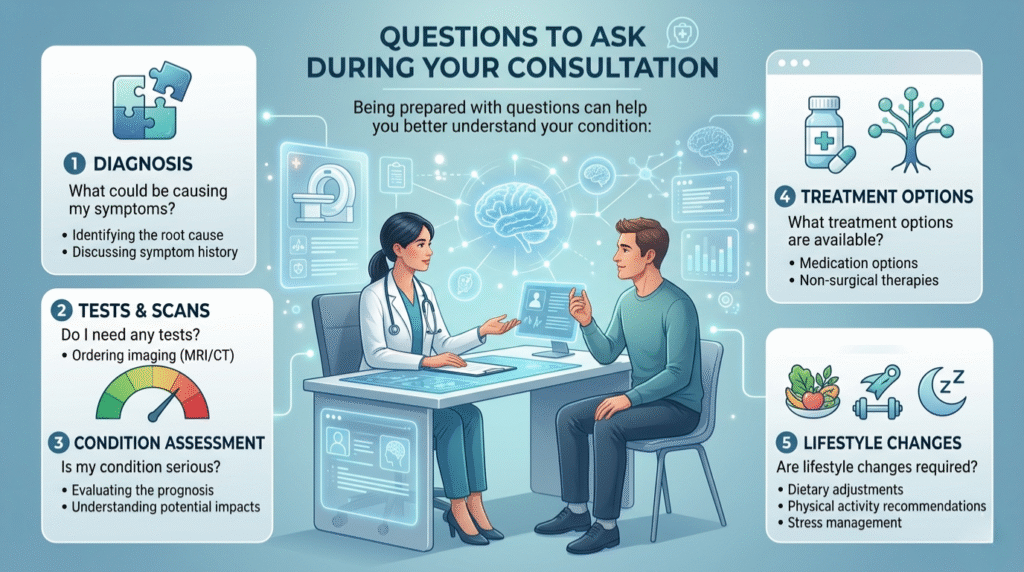
• What could be causing my symptoms?
• Do I need any tests?
• Is my condition serious?
• What treatment options are available?
• Are lifestyle changes required?
What to Expect During Your First Neurologist Appointment
During your visit to a neurologist, you can expect:
• Detailed discussion of symptoms
• Physical and neurological examination
• Reflex and coordination tests
• Memory and cognitive assessment
The neurologist may also recommend further tests if needed.
Common Tests Recommended
Depending on your condition, your doctor may suggest:
• MRI Brain – Provides detailed images of brain structures
• CT Scan – Helps detect injuries or bleeding
• EEG – Measures brain activity, useful for seizures
• Blood Tests – Identify infections or deficiencies
These tests help confirm the diagnosis and guide treatment.
Mistakes to Avoid Before Your Appointment
Avoid these common mistakes:
• Not bringing previous reports
• Forgetting medication details
• Hiding or ignoring symptoms
• Not asking questions
Being open and prepared leads to better care.
When Should You See a Neurologist?
You should consider booking a consultation if you experience:
• Frequent or severe headaches
• Seizures or blackouts
• Numbness or weakness
• Memory issues
• Dizziness or balance problems
Early consultation can prevent serious complications.
Why Choose Dr. Vinit Banga
Choosing the right specialist is crucial for effective treatment.
Dr. Vinit Banga is known for:
• Expertise in Interventional Neurology
• Specialization in stroke management
• Use of advanced diagnostic and treatment techniques
• Patient-focused and compassionate care
His approach ensures accurate diagnosis and effective treatment planning from your very first visit.
FAQs
How long does a first neurologist consultation take?
A typical visit lasts between 20 and 45 minutes, depending on the complexity of your symptoms and the evaluation required.
Do I need to prepare anything before my visit?
Yes, you should bring medical records, a list of symptoms, medications, and any previous test reports to make your consultation more effective.
Will I need tests during my first visit?
Not always. Your neurologist may first evaluate your condition and then recommend tests like an MRI or an EEG if necessary.
Is the consultation painful?
No, this type of visit is generally non-invasive and painless, involving discussion and simple physical tests.
Can I eat before my appointment?
Yes, you can eat normally unless your doctor has specifically instructed fasting for certain tests.
What symptoms require urgent consultation?
Severe headaches, sudden weakness, seizures, loss of consciousness, or difficulty speaking require immediate medical attention.
Conclusion
Your first neurologist appointment is an important step toward understanding and managing your neurological health. Proper preparation, clear communication, and early consultation can make a significant difference in diagnosis and treatment outcomes.
If you’re experiencing neurological symptoms, don’t delay seeking expert care.
Book your consultation with Dr. Vinit Banga for an accurate diagnosis and advanced treatment.
Related Blogs
Types of Migraine| Symptoms of Migraine |What is a Neurologist |Neurovascular Treatments |Manage Migraine Pain | Stroke in Young Adults| Life After Stroke |Migraine Treatment Methods |Guidelines for Chronic Neurological |Chronic Migraine Patients | Neurological Care in Faridabad |Early Signs of Stroke | Persistent Headache | Cost of Neurological Treatment | Neuropathy Causes | Epilepsy & Seizure Disorders | Migraine vs Normal Headache| Cost of Migraine Treatment